
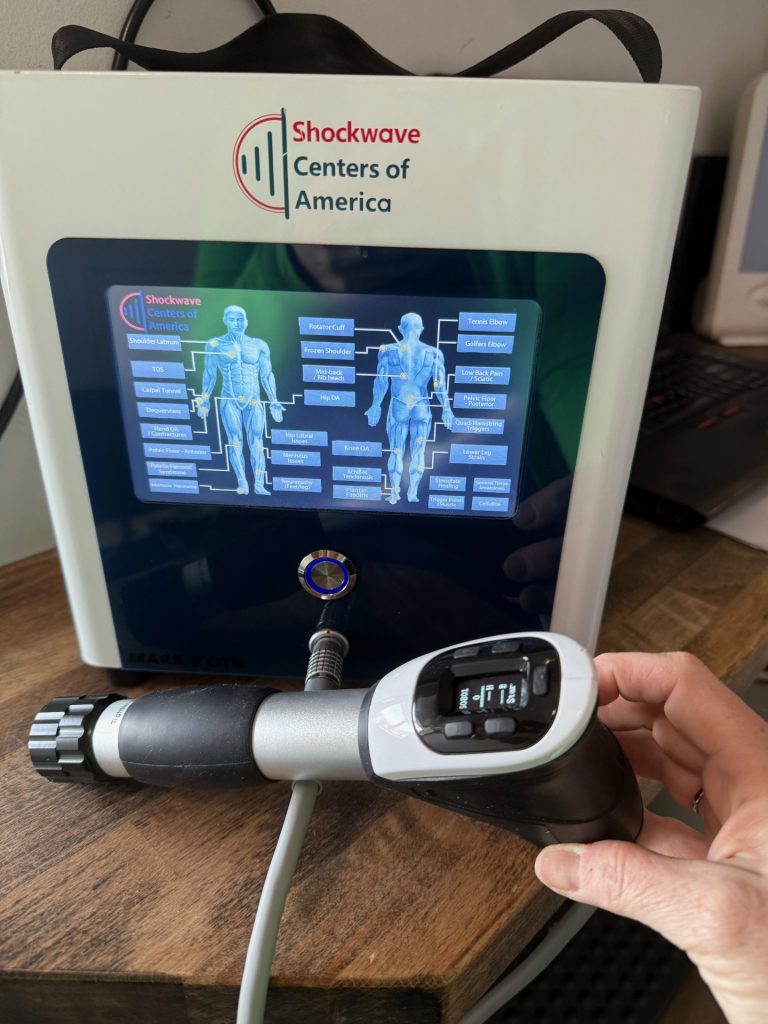
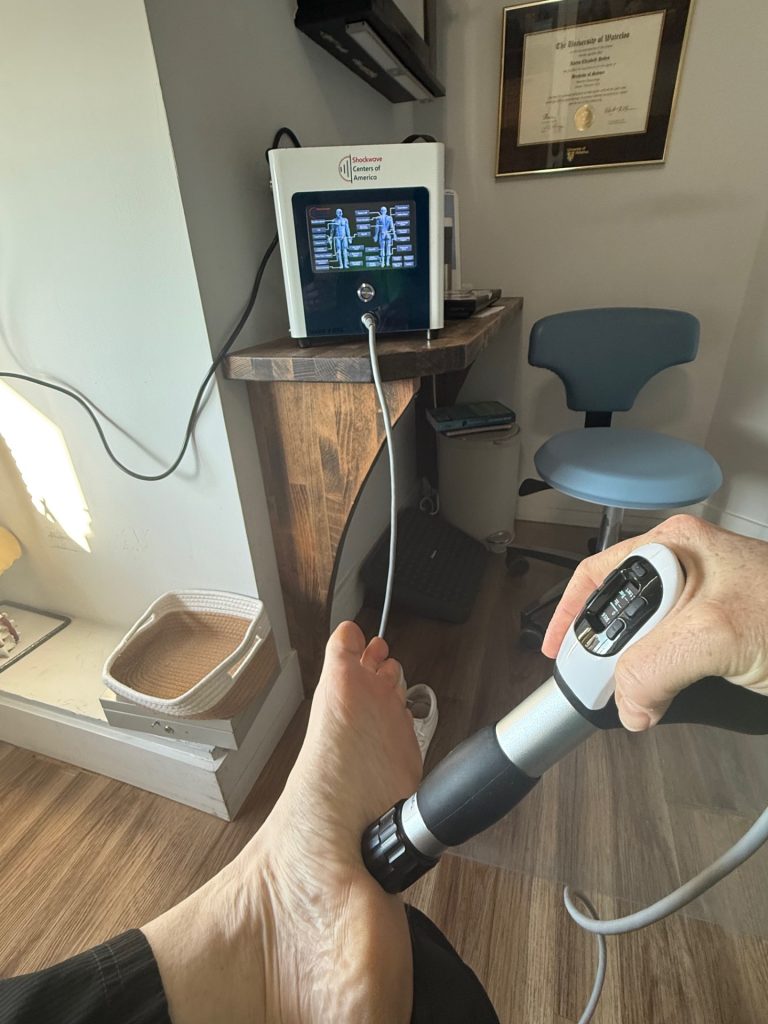
If you’ve been dealing with stubborn pain that just won’t go away—no matter how much stretching, rest, or treatment you’ve tried—shockwave therapy might be the missing piece.
In my chiropractic practice serving Lawrence Park and York Mills, I use shockwave therapy regularly to help patients move past chronic pain and finally start healing.
What Is Shockwave Therapy and How Does It Work?
Shockwave therapy uses acoustic waves to stimulate healing in injured or chronically irritated tissues like tendons and fascia.
These waves deliver mechanical energy into the tissue, which helps:
- Increase blood flow
- Stimulate cellular repair
- Break down stubborn scar tissue or calcifications
In simple terms, it “wakes up” tissue that has stopped healing properly.
When I was first looking into bringing shockwave into the clinic, I came across a story I still love. The technology was discovered over 30 years ago—possibly during blast testing. People living nearby were later surveyed, and unexpectedly, many reported decreased pain from conditions like tendonitis and arthritis.
Was it the acoustic waves affecting tissue at a cellular level? That’s what researchers began to explore—and what eventually led to modern shockwave therapy.
Whether or not that’s the full story, the results we see today are very real.
Shockwave vs. Ultrasound or Laser Therapy
A question I hear all the time is how shockwave differs from other therapies.
Ultrasound and laser primarily deliver energy through heat or light. Shockwave is different because it delivers a stronger mechanical stimulus that encourages a more active healing response.
This makes it particularly helpful for:
- Chronic injuries
- Stubborn tendon issues
- Pain that hasn’t responded to other treatments
Is Shockwave Therapy Evidence-Based?
Yes—there is strong and growing research supporting shockwave therapy for chronic musculoskeletal conditions.
Studies show positive outcomes for:
- Plantar fasciitis
- Tennis elbow
- Frozen shoulder
- Achilles tendinopathy
That said, it works best when used as part of a comprehensive plan. In my clinic, I combine shockwave therapy with proper diagnosis, targeted exercises, and hands-on chiropractic care to get the best results.
What Conditions Can Shockwave Therapy Treat?
Shockwave therapy is most effective for chronic tendon and soft tissue issues—especially ones that have been lingering for months.
Common conditions we treat include:
- Plantar fasciitis (heel pain)
- Tennis elbow and golfer’s elbow
- Achilles tendinopathy
- Patellar tendinopathy (jumper’s knee)
- Rotator cuff injuries
- Frozen shoulder (including calcific tendonitis)
Conditions I Was Honestly “Shocked” It Helped
There are also some conditions where the results have surprised even me.
I personally dealt with plantar fasciitis in both feet (likely related to perimenopause and hormonal changes). After about 8 treatments, my pain was completely gone—even though the root cause hadn’t changed.
I’ve also seen great results with:
- Chronic lower back pain (especially in people who sit most of the day)
- Persistent trigger points
- Foot osteoarthritis (pain relief and improved function)
Other conditions that often respond well include:
- Chronic hip or gluteal tendon pain
- Neck tension and stiffness
- Long-standing muscle tightness
- Pain associated with osteoarthritis
What Does Shockwave Therapy Feel Like?
The best way to describe it is like a light elastic band snapping against the skin.
Some areas can feel tender, especially if already irritated, but treatments are very manageable.
In my clinic:
- I keep the intensity at a comfortable level (no more than 3/10)
- I adjust based on your feedback
- Each area takes about 3–5 minutes
When I first started offering shockwave, it was more uncomfortable. Over time, I’ve refined my technique so treatments are much more tolerable.
What Should You Expect From Treatment?
Shockwave sessions are quick and efficient.
Most patients need:
- 5–8 treatments
- Typically spaced one week apart (sometimes twice weekly)
After treatment, you may feel mild soreness for a day or two—similar to how you feel after a good workout. This is normal and part of the healing process.
Some people notice improvements early, but more often the biggest changes happen gradually over several weeks as the tissue repairs.
The goal is not just short-term relief—but long-term healing.
Is Shockwave Therapy Right for You?
If you’re dealing with pain that:
- Keeps coming back
- Hasn’t improved with other treatments
- Has been present for months
Shockwave therapy may be exactly what your body needs.
At my clinic in the Lawrence Park and York Mills area, I use shockwave as part of a personalized, hands-on approach to care—so you’re not just feeling better temporarily, but actually healing.
Ready to Get Started?
If you’re curious whether shockwave therapy is right for you, I’d be happy to help.
Book an appointment today and let’s create a plan to get you moving—and feeling—like yourself again.